| :: HOME :: CONTACT :: EVENTS :: SUPPORT :: VILLAGE :: |
 |
North East Digital VillageEndangered CreaturesWolves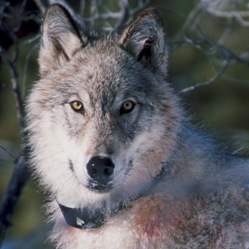
Wolves are loved by many and hated by others. Throughout history, the human - wolf relationship has been characterized by romantic notions, fearsome stories and myth. Familiar as the family dog, mysterious as the night and mythical as werewolves, wolves have been co-existing with humankind for thousand of years. In the American west, blamed for disappearance of sheep, cattle and farmyard critters, wolves were hunted down and shot -- nearly to extinction. As more and more of the wilderness gave way to homes and farms and ranches, the habitat of the wolf was growing smaller adn smaller. Happier to be apart from man than in his backyard, the wolf often had little choice than to seek their prey on lands those human forms of habitat now occupied. Conflict between man and wolf seems to have been inevitable. When hunting wolves to near-extinct, what humans failed to consider was the essential role wolves play in the balance of the ecosystem. Without wolves, deer and moose have few predators, and their numbers can grow beyond the remaining habitat's ability to sustain them. Gray WolfGray Wolf (Canis lupus): A keystone predator, the gray wolf is an integral component of the ecosystems to which it typically belongs. The wide range of habitats in which wolves can thrive reflects their adaptability as a species, and includes temperate forests, mountains, tundra, taiga, and grasslands. The Fish & Wildlife Service is currently monitoring several populations of the Gray wolf. Gray Wolf Fact Sheet: Second only to humans in adapting to climate extremes, gray wolves (Canis lupus) once ranged from coast to coast and from Alaska to Mexico in North America. They were absent from the East and the Southeast, which were occupied by red wolves (Canis rufus), and from the large deserts in the southwestern States. By the early 20th century, government-sponsored predator control programs and declines in prey brought gray wolves to near extinction in the lower 48 States. Save Wolves in the Northern Rockies and areas near Yellowstone National Park, Alaska, the American Southwest and elsewhere.Urge President Obama to End the War on Wolves Urge Congress to Fight Aerial Wolf Killing Speak Up for Southwest Wolves! Red Wolf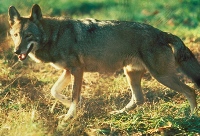
Red wolf (Canis rufus): One of two species of wolves in the world, the other being the gray wolf. As their name suggests, red wolves are known for the characteristic reddish color of their fur most apparent behind the ears and along the neck and legs, but are mostly brown and buff colored with some black along their backs. Intermediate in size to gray wolves and coyotes, the average adult red wolf weighs 45-80 pounds, stands about 26 inches at the shoulder and is about 4 feet long from the tip of the nose to the end of the tail. The Fish & Wildlife Service is currently monitoring the following populations of the Red wolf in Tennessee and North Carolina. For more information, see the Red Wolf Recovery Project Alligator River National Wildlife Refuge Red Wolf Re-establishment Program: The red wolf is one of the most endangered animals in the world. It is a shy species that once roamed throughout the Southeast as a top predator. Aggressive predator control programs and clearing of forested habitat combined to cause impacts that brought the red wolf to the brink of extinction. By 1970, the entire population of red wolves was believed to be less than 100 animals confined to a small area of coastal Texas and Louisiana. The red wolf is now back in the wild, hunting, rearing young, and communicating by its characteristic howl, in a portion of in its original southeastern habitat. Since 1987, red wolves have been released into northeastern North Carolina and now roam over more than 1.5 million acres. Other red wolves have been released on coastal islands in Florida and South Carolina as a steppingstone between captivity and the wild. Red Wolf Coalition: The Red Wolf Coalition advocates for the long-term survival of red wolf populations by teaching about the red wolf and by fostering public involvement in red wolf conservation. The Coalition hosts an "Adopt-A-Red Wolf" program, allowing individuals, classrooms, or other groups to sponsor a wild red wolf and receive periodic updates about their specific wolf.
Maned WolfManed wolf (Chrysocyon brachyurus) is an endangered species living in Argentina, Bolivia, Brazil, Paraguay, and Uruguay. Standing about three feet tall at the shoulders, and weighing about 50 pounds, the maned wolf has large, long ears. They have reddish-brown coats and a mane along their back. |
|


